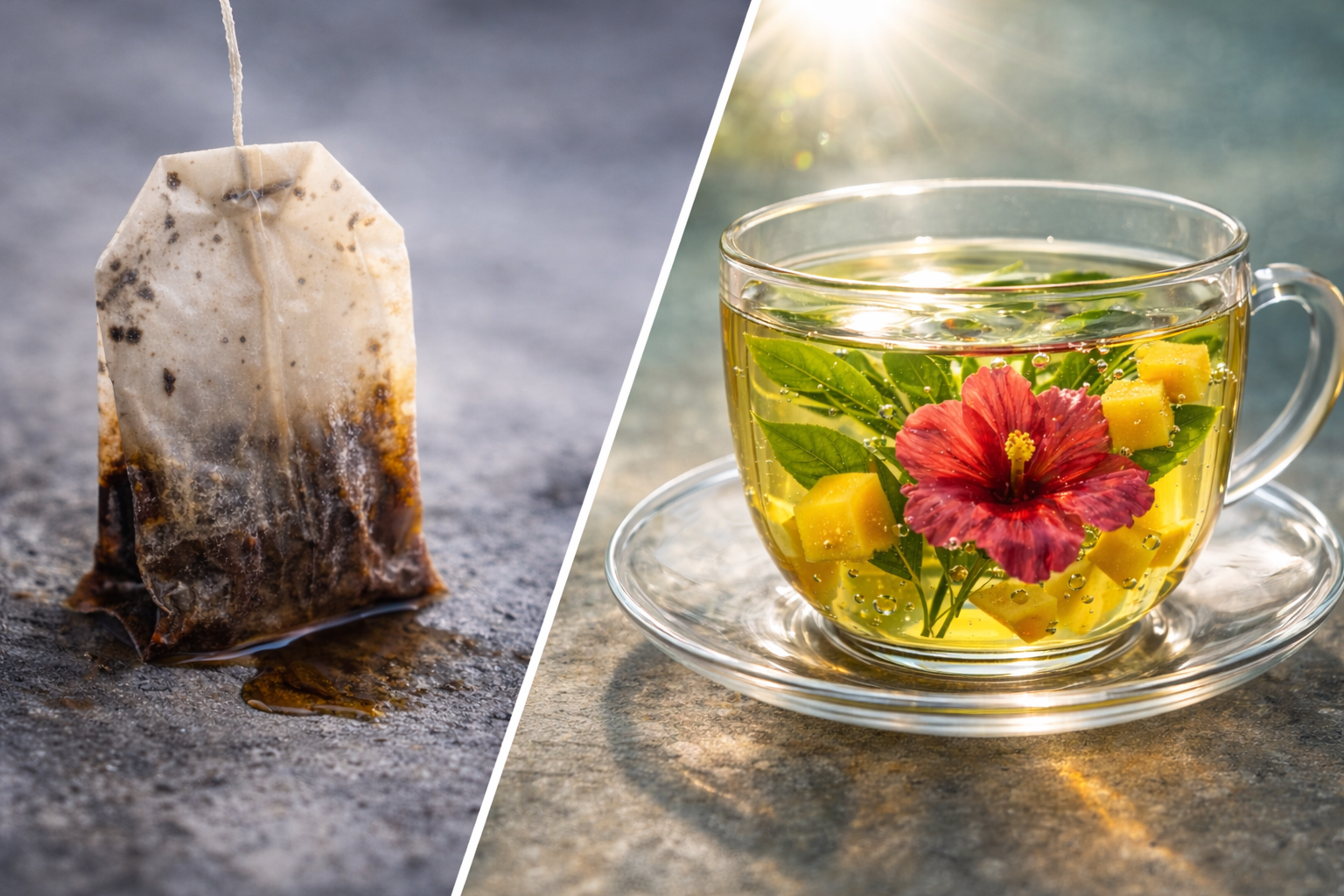
The Wellness Revolution Changing How We Drink Tea
For decades, the tea ritual has remained unchanged: drop a tea bag into hot water, wait a few minutes, squeeze it, and throw it away.
But in 2026, a growing number of health-conscious consumers are asking a powerful question:
Why are we throwing away the most nutritious part of our tea?
Traditional tea bags were created as a 20th-century convenience. They prioritized speed and ease, but sacrificed something important — the full nutritional value of the plant.
Now a new trend is emerging across the wellness industry:
Edible wellness.
Instead of discarding the plant material, people are embracing edible herbal teas made with real fruits and botanicals that can be enjoyed after brewing. This movement combines three major lifestyle trends:
Whole-food nutrition
Gut-health optimization
Zero-waste living
At SACFruits, we believe tea should do more than flavor your water.
It should nourish your body.
Why Traditional Tea Bags Waste Nutrients
When you steep a conventional tea bag, you extract only a portion of the plant’s nutrients.
A significant amount of nutritional value remains locked inside the plant fiber and fruit pulp.
Research in nutritional science shows that up to 40% of a fruit’s nutrients can remain in its fiber matrix, including:
Fat-soluble vitamins
Essential minerals
Polyphenols
Antioxidants
When the tea bag or pulp is discarded, these nutrients are lost.
The Problem With Liquid-Only Tea
Traditional tea focuses mainly on water-soluble compounds, leaving behind important components such as:
| Nutrient Type | What Happens in Traditional Tea |
|---|---|
| Antioxidants | Only partially extracted |
| Fiber | Completely discarded |
| Minerals | Partially retained |
| Fat-soluble vitamins | Mostly left behind |
This means the typical tea experience delivers only a fraction of the plant’s nutritional potential.
Edible herbal teas solve this problem by allowing you to consume the entire ingredient, not just its extract.
The Rise of Edible Tea: A Whole-Food Approach to Wellness
The concept of edible tea is simple but powerful.
Instead of grinding plants into dust and sealing them inside disposable bags, edible teas use whole dried fruits, herbs, and botanicals.
After brewing, the ingredients become soft, flavorful, and completely edible.
This transforms tea from a simple drink into a functional wellness ritual.
Benefits of Edible Herbal Tea
Maximum nutrient absorption
Higher antioxidant intake
Natural fiber consumption
More satisfying drinking experience
Reduced environmental waste
Rather than throwing away valuable plant material, you drink and eat the full infusion.
The Fiber Revolution: Why Gut Health Starts With Your Tea
One of the biggest health trends of the decade is fiber optimization, sometimes called “fibermaxxing.”
Modern diets are often extremely low in fiber due to processed foods and refined carbohydrates.
According to research from the World Health Organization, most adults consume less than half of the recommended daily fiber intake.
Fiber plays a critical role in:
Digestive health
Blood sugar regulation
Weight management
Microbiome balance
Traditional tea contains zero fiber.
But edible fruit tea changes that completely.
How Edible Tea Supports Gut Health
When fruit pieces are rehydrated during brewing, they retain their natural dietary fiber.
This fiber acts as a prebiotic, meaning it feeds the beneficial bacteria in your gut.
A healthy gut microbiome is linked to:
Improved digestion
Stronger immune function
Better mental health
More stable energy levels
When you eat the fruit after drinking the tea, you’re supporting your digestive system in a way that liquid tea simply cannot match.
Learn more about gut health and fiber at the Harvard Nutrition Source:
https://www.hsph.harvard.edu/nutritionsource/carbohydrates/fiber/
The Zero-Waste Tea Movement
Sustainability is another major reason consumers are moving away from tea bags.
Many people don’t realize that most commercial tea bags contain plastic.
Studies have shown that certain tea bags release billions of microplastic particles into hot water during brewing.
Other environmental concerns include:
Bleached paper tea bags
Synthetic mesh sachets
Single-use packaging waste
These materials often end up in landfills or oceans.
Edible Tea Supports a Circular Wellness Ritual
Edible fruit teas offer a more sustainable alternative.
With SACFruits, the process becomes a zero-waste ritual:
Sip – Brew sun-dried West African fruit blends for 5–7 minutes.
Savor – Enjoy the rich flavors of hibiscus, moringa, mango, and other botanicals.
Snack – Eat the tender fruit pieces once they’ve softened.
Nothing is discarded.
Nothing goes to the landfill.
Everything contributes to your wellness.
Why 2026 Is the Turning Point for Edible Wellness
1. Consumers Want Functional Foods
People are increasingly choosing foods that actively improve their health, rather than just satisfy hunger.
Functional ingredients like:
Hibiscus
Moringa
Baobab
Ginger
Turmeric
are gaining popularity for their anti-inflammatory and antioxidant benefits.
2. Gut Health Awareness Is Exploding
The microbiome has become one of the most researched areas in health science.
Consumers are actively searching for:
Prebiotic foods
High-fiber snacks
Digestive wellness drinks
Edible fruit teas naturally align with these needs.
3. Sustainability Is Now a Purchase Driver
Modern consumers care deeply about environmental impact.
Zero-waste products, especially in the food and beverage industry, are becoming major purchase drivers.
Products that combine health benefits and sustainability have a significant advantage.
The SACFruits Ritual: Sip, Snack, Nourish
At SACFruits, tea isn’t just a drink.
It’s a three-step wellness ritual.
Step 1: Brew
Place sun-dried fruit blends into hot water and steep for 5–7 minutes.
The infusion releases vibrant flavors and plant nutrients.
Step 2: Enjoy the Infusion
The tea develops deep aromatic notes from West African botanicals like:
Hibiscus
Moringa
Mango
Ginger
Each ingredient contributes natural vitamins, antioxidants, and phytonutrients.
Step 3: Eat the Fruit
Once hydrated, the fruit pieces become soft, flavorful, and nutrient-dense.
Enjoy them with a spoon for a natural fiber boost.
Edible Tea vs Traditional Tea Bags
| Feature | Traditional Tea Bag | Edible Fruit Tea |
|---|---|---|
| Nutrient retention | Partial | Full spectrum |
| Fiber content | None | High |
| Waste produced | High | Zero |
| Microplastic risk | Possible | None |
| Satiety | Low | Moderate |
| Gut health benefits | Limited | Significant |
This simple comparison shows why edible tea is quickly becoming the next evolution in wellness beverages.
Frequently Asked Questions
Is edible tea safe to eat?
Yes. Edible teas are made with food-grade dried fruits and herbs, making them completely safe to consume after brewing.
Does edible tea contain more nutrients?
Yes. Because you consume the entire ingredient, edible tea provides more fiber, minerals, and antioxidants than traditional tea bags.
Can edible tea help digestion?
Yes. The natural fiber in fruit tea supports the gut microbiome and helps promote healthy digestion.
Is edible tea better for the environment?
Absolutely. Since nothing is thrown away, edible tea reduces single-use packaging and landfill waste.
Does edible tea contain caffeine?
Most edible fruit teas are naturally caffeine-free, making them ideal for afternoon or evening consumption.
What fruits work best for edible tea?
Common ingredients include:
Hibiscus
Mango
Pineapple
Ginger
Moringa
Citrus peel
These ingredients soften nicely during brewing and retain their nutritional value.
The Future of Tea Is Edible
The tea bag was created for convenience.
But today’s consumers want more than convenience.
They want:
Real nutrition
Sustainable products
Functional wellness
Edible tea delivers all three.
By embracing the whole plant instead of just the extract, edible wellness transforms a simple beverage into a nutrient-rich daily ritual.
The question is no longer whether edible tea will replace traditional tea bags.
The real question is:
Why would anyone throw away the best part of their tea again?