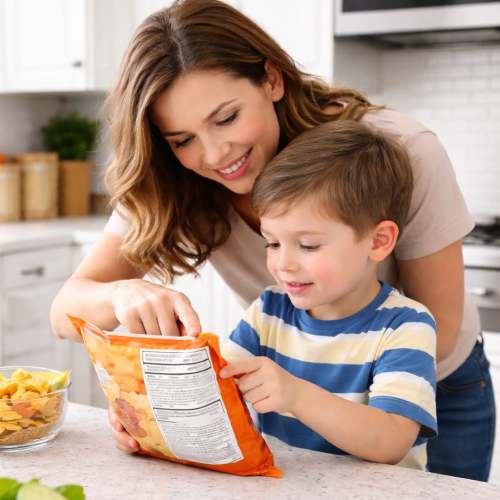
A simple way to teach kids healthy snacking habits early
Why Food Education Should Start Early
Food education is one of the most powerful — and most overlooked — tools in raising healthy children. Long before kids understand calories, macros, or serving sizes, they are already forming opinions and habits around food.
The good news? Teaching food awareness doesn’t need to be complicated.
If your child can read basic words, they can begin learning how to read a snack label. And that single habit can shape how they relate to food for years to come.
Why the Ingredient List Is the Best Place to Start
When most people think about food labels, they think of the nutrition facts table — calories, percentages, numbers, and charts. For adults, this can already feel overwhelming. For kids, it’s often meaningless.
The ingredient list, however, tells a much clearer story.
Ingredients are listed in order of quantity, from most to least. This makes it an ideal, beginner-friendly entry point for children learning how to understand what they’re eating.
Instead of asking kids to interpret numbers, you’re teaching them recognition, awareness, and curiosity.
Practical Ways to Teach Kids to Read Snack Labels
Focus on Ingredients They Recognize
Start simple. Ask your child to look for ingredient names they already know — like mango, coconut, cashew nuts, apples, or bananas.
Then gently contrast those with long, unfamiliar words they can’t pronounce. This helps children naturally understand the difference between foods made from real ingredients and those that rely heavily on additives.
The goal isn’t to scare them — it’s to build familiarity.
Compare Similar Snacks Together
Turn grocery shopping or snack time into a learning moment.
Pick two snacks that look similar and compare their ingredient lists:
-
Which one has fewer ingredients?
-
Which one uses real food names?
-
Which list feels easier to understand?
This approach empowers kids to think critically without feeling restricted or judged.
Avoid “Good” and “Bad” Food Labels
Instead of labeling foods as “good” or “bad,” focus on how food helps fuel the body.
You might say:
-
“This snack helps keep you full longer.”
-
“This one gives you quick energy.”
-
“This one is made mostly from real fruit.”
This language helps children build a healthy relationship with food — one based on understanding, not fear or guilt.
How Reading Labels Builds Lifelong Healthy Habits
Kids who learn early how to read ingredient lists grow into adults who:
-
make informed food choices
-
understand what they’re eating
-
don’t rely solely on marketing claims
-
feel confident navigating grocery stores and menus
Food education isn’t about control. It’s about awareness.
When children feel empowered to choose snacks for themselves, healthy habits become something they own — not something enforced.
Choosing Snacks Made With Real Ingredients
As families aim to stock their homes with better snack options, many parents are looking for products made with short, recognizable ingredient lists.
Snacks made primarily from real fruit, nuts, or simple whole foods make label-reading easier for kids and decision-making easier for parents. They also support conversations about clean snacking without turning food into a moral issue.
Teaching children to read labels helps them understand why certain snacks fit better into everyday routines — not because they’re “perfect,” but because they’re simple and transparent.
Final Thoughts
Food education doesn’t start with strict rules or complex nutrition charts. It starts with curiosity, conversation, and small, everyday choices.
If your child can read, they can read a snack label — and that skill may be one of the most valuable lessons you give them.